



'/%3E%3Cpath%20fill='%23b2b2b2'%20d='M241%20382q0%2016%2017%2026%2017%2011%2042%2011t42-11q16-11%2017-26V269H241'/%3E%3Cpath%20fill='%239f7e00'%20d='M241%20379q0%2014%208%2023%209%209%2021%209%2014%200%2021-9%209-9%209-23V269h-59'/%3E%3Cpath%20d='M241%20339v-70h59v110q0%2014-9%2023l-6%205v-68h-15v72q-8%200-14-4v-68zm59%2040c0%2022%2015%2032%2029%2032%2021%200%2030-18%2030-32v-40h-59'/%3E%3Cpath%20fill='%239f7e00'%20d='M266%20277v5h2v12h-3v-5h2v-5h-9v5h2v5h-4v9h3v18h-5v10h34v-10h-5v-18h3v-9h-4v-5h2v-5h-9v5h2v5h-3v-12h2v-5zm42%20101q0%2010%206%2017%206%206%2015%207%2010-1%2016-7%206-7%206-17v-29h-43'/%3E%3Ccircle%20fill='%230044ad'%20cx='329.5'%20cy='372'%20r='6'/%3E%3Cellipse%20fill='%230044ad'%20cx='300'%20cy='340'%20rx='16'%20ry='21'/%3E%3C/svg%3E)
What is a teleprompter? Definition and working principle
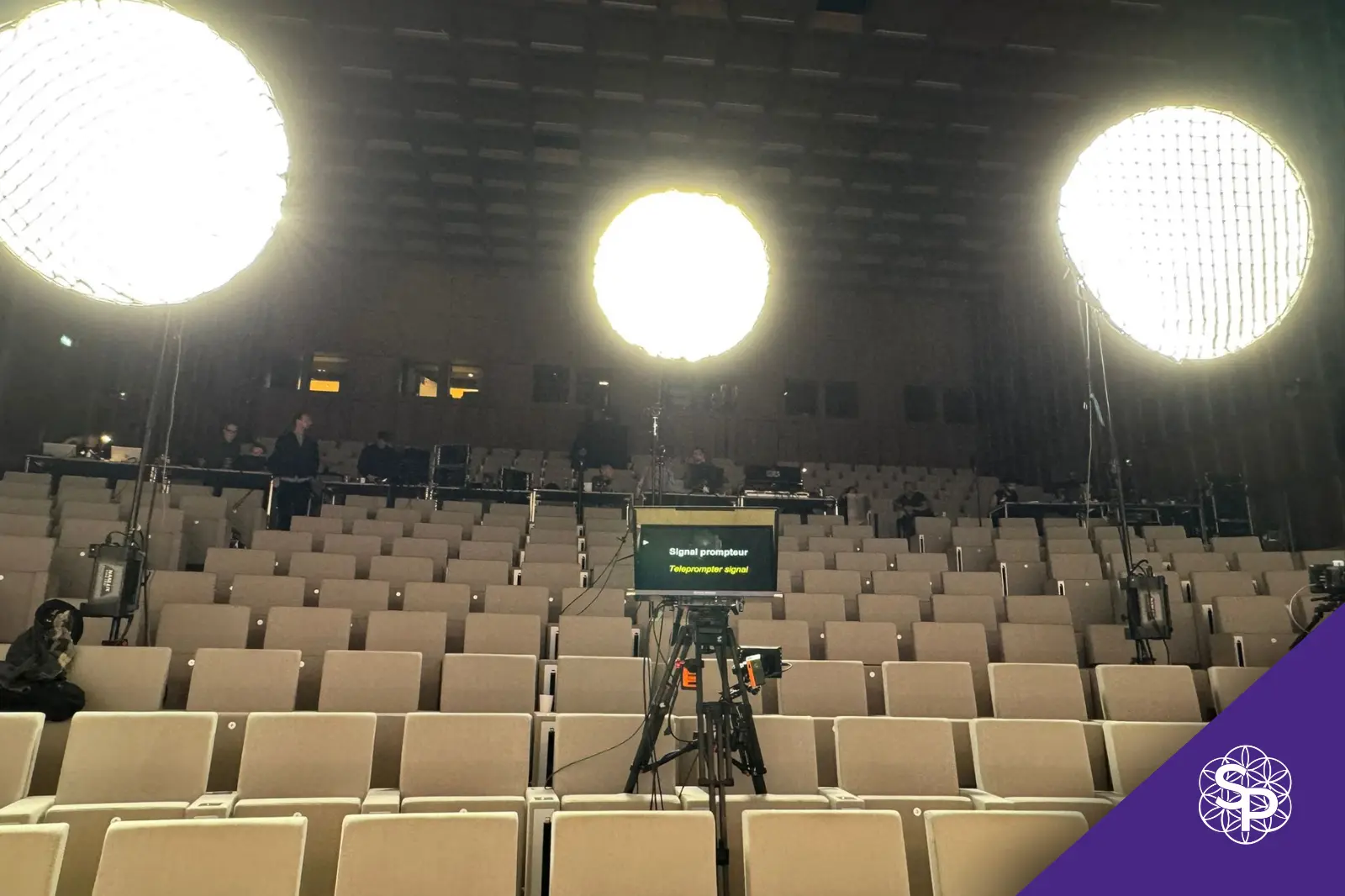
A teleprompter (or prompter) is a professional device that displays scrolling text on a beamsplitter glass placed in front of a speaker or a camera lens, allowing them to read their speech while maintaining a natural eye contact with the audience or the camera.
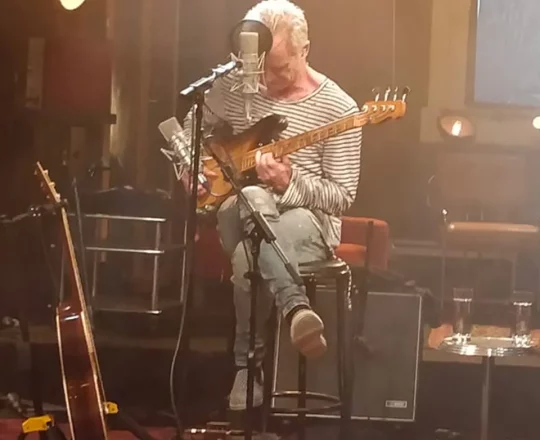
It is widely used on television sets, during official speeches, corporate conferences, international summits, political campaigns, and live concerts.
In this comprehensive guide, we explain everything you need to know about professional teleprompters.
- A teleprompter displays scrolling text on a beam-splitter glass, invisible to the audience
- There are 6 types: camera, conference, stage, wireless, Pro Glasses, interrotron
- A dedicated operator synchronises the scroll in real time — that's the key factor
- Benefits: natural delivery, time saved on set, psychological safety net, zero error
- Invented in 1950 in the United States, it is now used on every TV set and official event worldwide
Where does the word "teleprompter" come from?
The word “prompter” comes from the English verb to prompt, which means “to whisper” or “to incite”. It is the direct digital descendant of the theater prompter—the person historically hidden in the prompt box or orchestra pit to discreetly remind actors of their lines.
In the broadcast and event industries, the teleprompter has become the high-tech evolution of this ancestral role. Instead of a human voice, a high-definition, high-brightness screen now “prompts” the text to the speaker, completely invisible to the audience.
Is it difficult to read from a teleprompter?
No, reading from a teleprompter is not difficult, provided that the text scrolling speed is perfectly synchronized with the speaker’s natural rhythm. The system simply requires a short adaptation phase to pace one’s voice, get used to the visual scrolling, and maintain a fluid delivery without sounding like you are reading a script.
In professional practice, one or two rehearsal sessions of 15 to 30 minutes are more than enough to make a complete beginner feel entirely comfortable with the tool.
How does a professional teleprompter work?
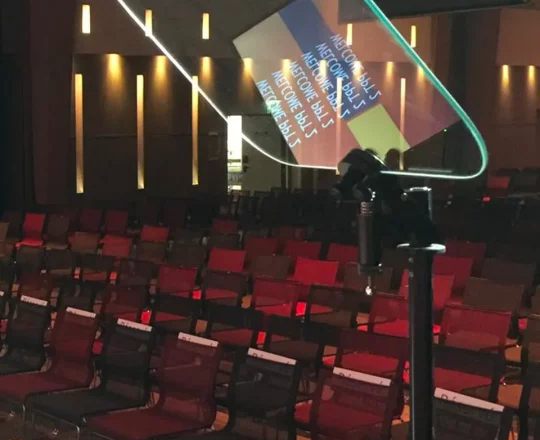
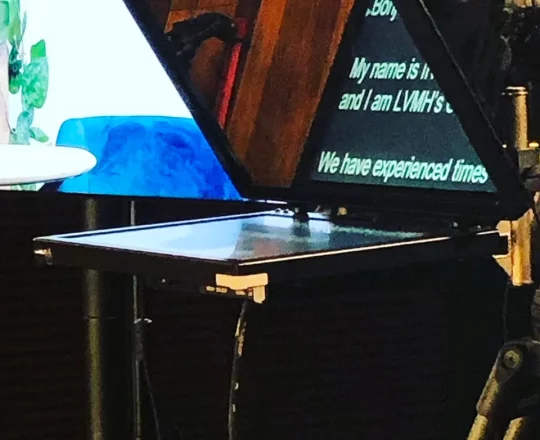
A teleprompter works using a semi-reflective glass: the speaker sees the text scrolling in front of them, while the camera or the audience, positioned on the other side of the glass, sees absolutely nothing. The text is displayed on a monitor placed flat beneath this glass, and its reflection is only visible to the speaker, making the device completely invisible to the public.
While this mechanism forms the core of most standard configurations, the exact setup varies depending on the type of prompter used.
The prompting software and the role of the operator
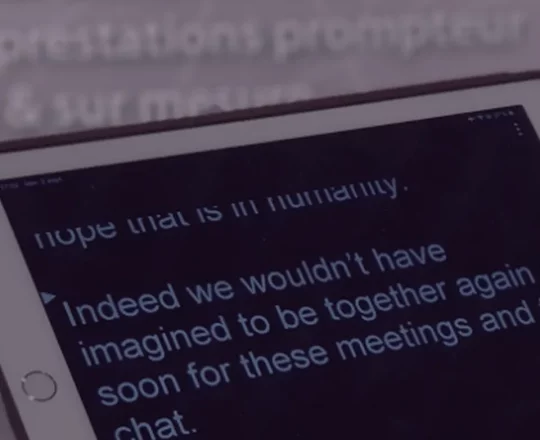
The text scrolls on the screen thanks to professional, broadcast-grade teleprompter software. The global industry standards are Autocue and Autoscript —the exact same tools used by major international television networks and high-level productions.
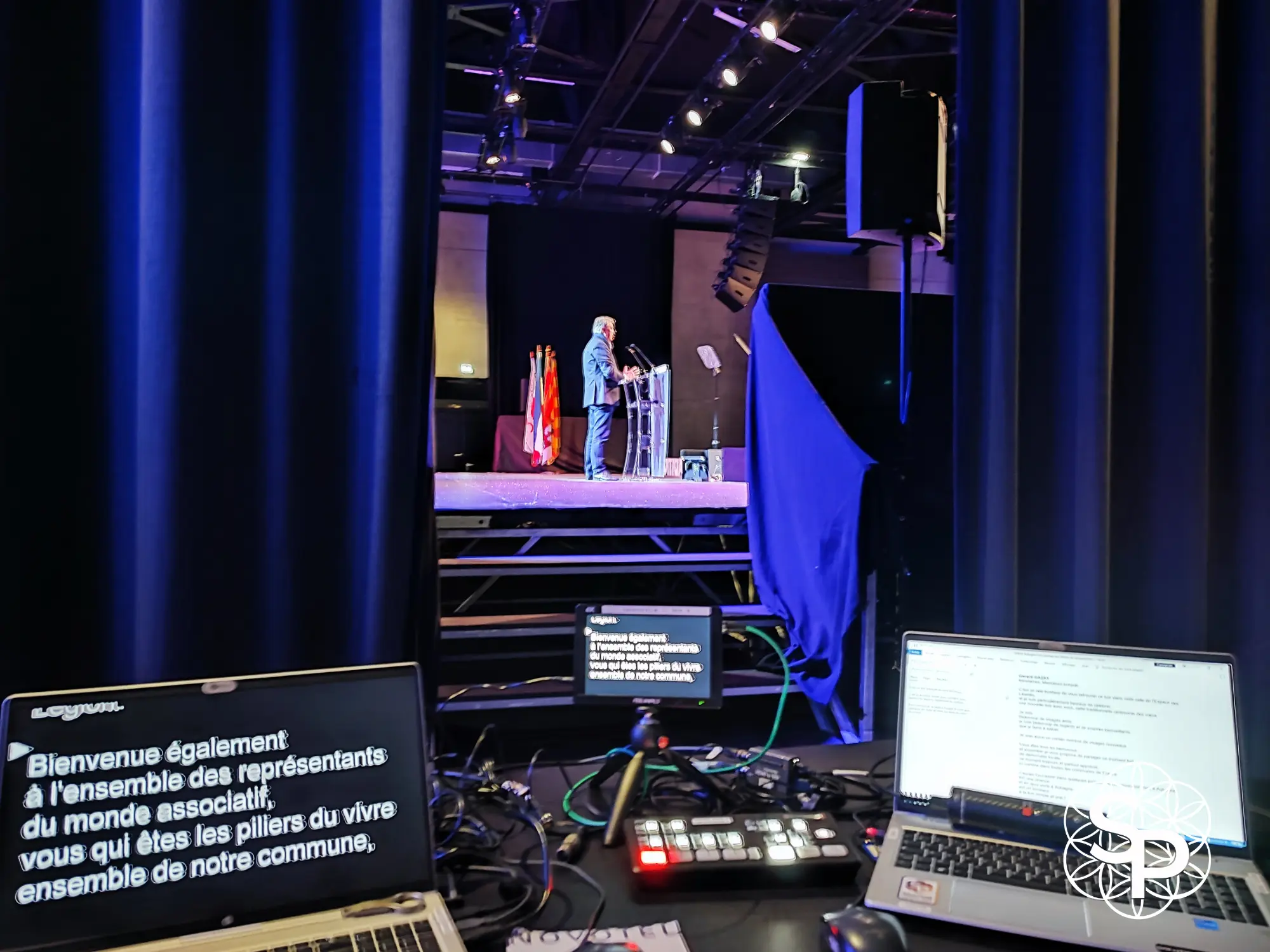
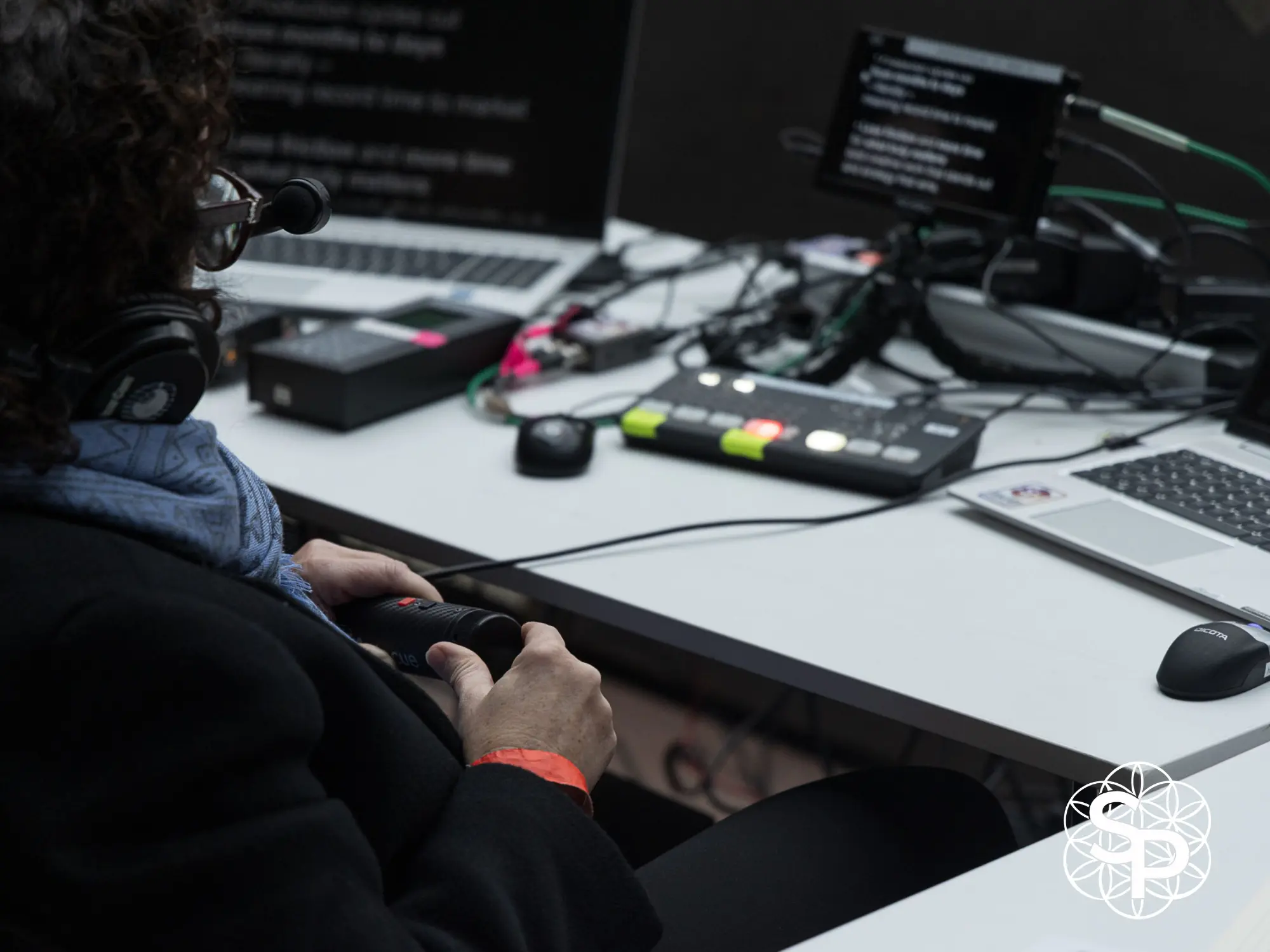
However, technology is only half of the equation: the real game-changer is the operator. On any professional event or shoot, a dedicated operator controls the scrolling speed in real-time. They constantly adapt to the speaker’s delivery:
- If the speaker speeds up, the operator follows.
- If the speaker pauses for an ad-lib or an improvisation, the operator pauses.
- If the speaker goes back to repeat a phrase, the operator instantly repositions the text.
This human synchronization is what differentiates a professional execution from a basic tablet application running at a fixed speed. This is why high-stake events always rely on a trained operator. At Solutions Prompteur, our operators are specifically trained for multilingual contexts and high-pressure environments (live TV, international summits, plenary sessions).
The different types of teleprompters
← Swipe to see the full table
| Prompter | Speakerfixed or free to move? | Outdooroutdoor compatible? | Typical Profile |
|---|---|---|---|
🎥 CameraTV · Filming |
Fixed facing camera | ✓ Compatible | Executive (greetings, filmed speech) Studio journalist, video trainer |
🎙️ ConferenceSpeech · Official |
Fixed at lectern | ✓ Compatiblewith our sun shades | Head of State, CEO, official figure Keynote, summit, general assembly |
🎭 StageConcerts · Galas |
✓ Free to move | ✓ Compatible | Singer, ceremony host Stage performer, mobile presenter |
📡 WirelessSteadicam · Mobile |
✓ Free to move | ✓ Compatible | Product launch presenter Travelling host |
🕶️ Pro GlassesTotal mobility |
✓ Fully mobile | ✓ Compatible | Ultra-mobile presenter Guide, speaker without lectern |
🎬 InterrotronInterview · Junket |
Fixed facing camera | Indoor only | Actor (press junket, making-of) On-camera interviewer, documentary |
Why use a teleprompter for professional public speaking?
The teleprompter offers four decisive advantages for corporate and high-stake executive communication.
The illusion of an improvised speech
Without a prompter, speakers face a constant dilemma: memorize their text by heart (and risk sounding mechanical) or rely on paper notes (and risk losing eye contact with the audience).
The teleprompter eliminates this problem. The text scrolls directly in front of the speaker, allowing them to deliver their speech naturally as if they were ad-libbing, while precisely following a script meticulously drafted and approved in advance. This is why news anchors, political leaders, and Fortune 500 CEOs use them systematically: it creates the perfect illusion of spontaneous delivery when every word is actually fully mastered.
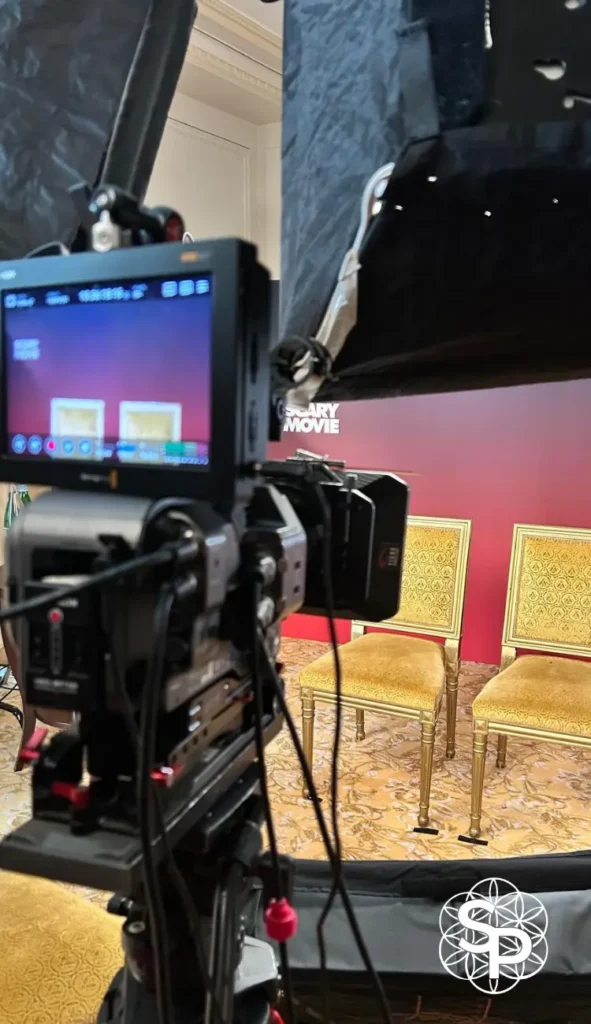
In video production, using a teleprompter drastically reduces the number of takes. Without it, a corporate shoot can easily require 15 to 20 takes to get a fluid paragraph. With a professional teleprompter and a seasoned operator, 1 or 2 takes are usually enough. The time and budget savings in both shooting and post-production are immediate.
Significant time savings in production
For live events (conferences, general assemblies, ceremonies), the impact is even more significant: there is only one take. The teleprompter guarantees that this single take will run smoothly.
The psychological safety net
Stage fright is a speaker’s number one enemy. Knowing that the script is right there, permanently visible, provides an immediate relief: the speaker relaxes, their voice steadies, and their body language becomes more natural. They can focus entirely on posture, tone, and connecting with the audience rather than fighting the cognitive strain of memory retrieval.
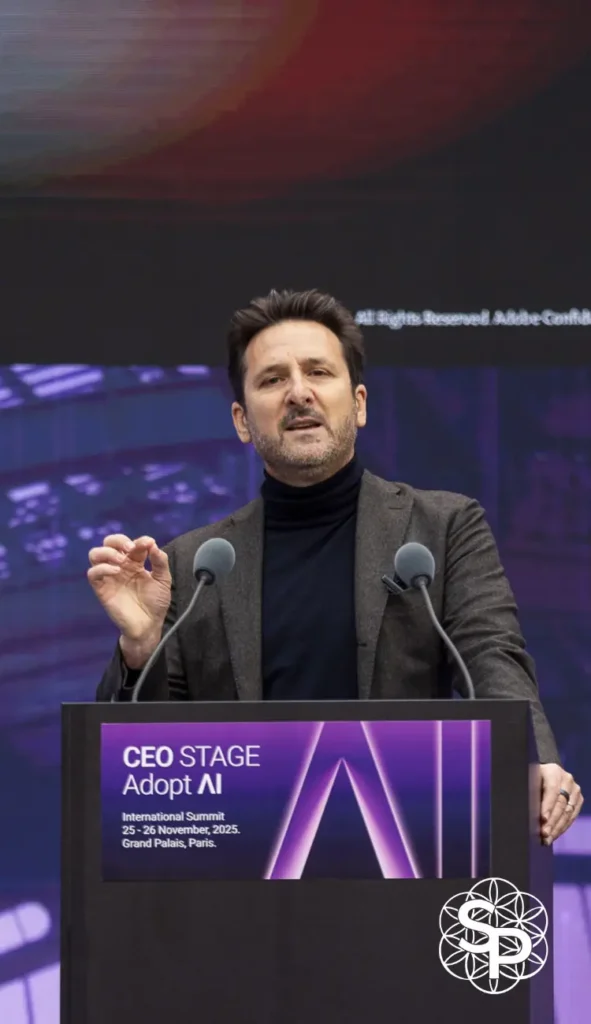
The most experienced speakers confirm it: they don't use a teleprompter because they don't know their text — they use it because this safety net frees their energy for the actual performance.
High-stake speeches with zero margin for error
An earnings announcement can be scrutinized word-for-word by market analysts. A diplomatic address contains specific phrasing validated by entire legal teams. A crisis communication statement, if misspoken by a single word, can trigger a media storm in less than 48 hours.
In these contexts, the teleprompter is not a comfort tool. It is the ultimate guarantee that the validated script will be delivered exactly as it was written and approved.
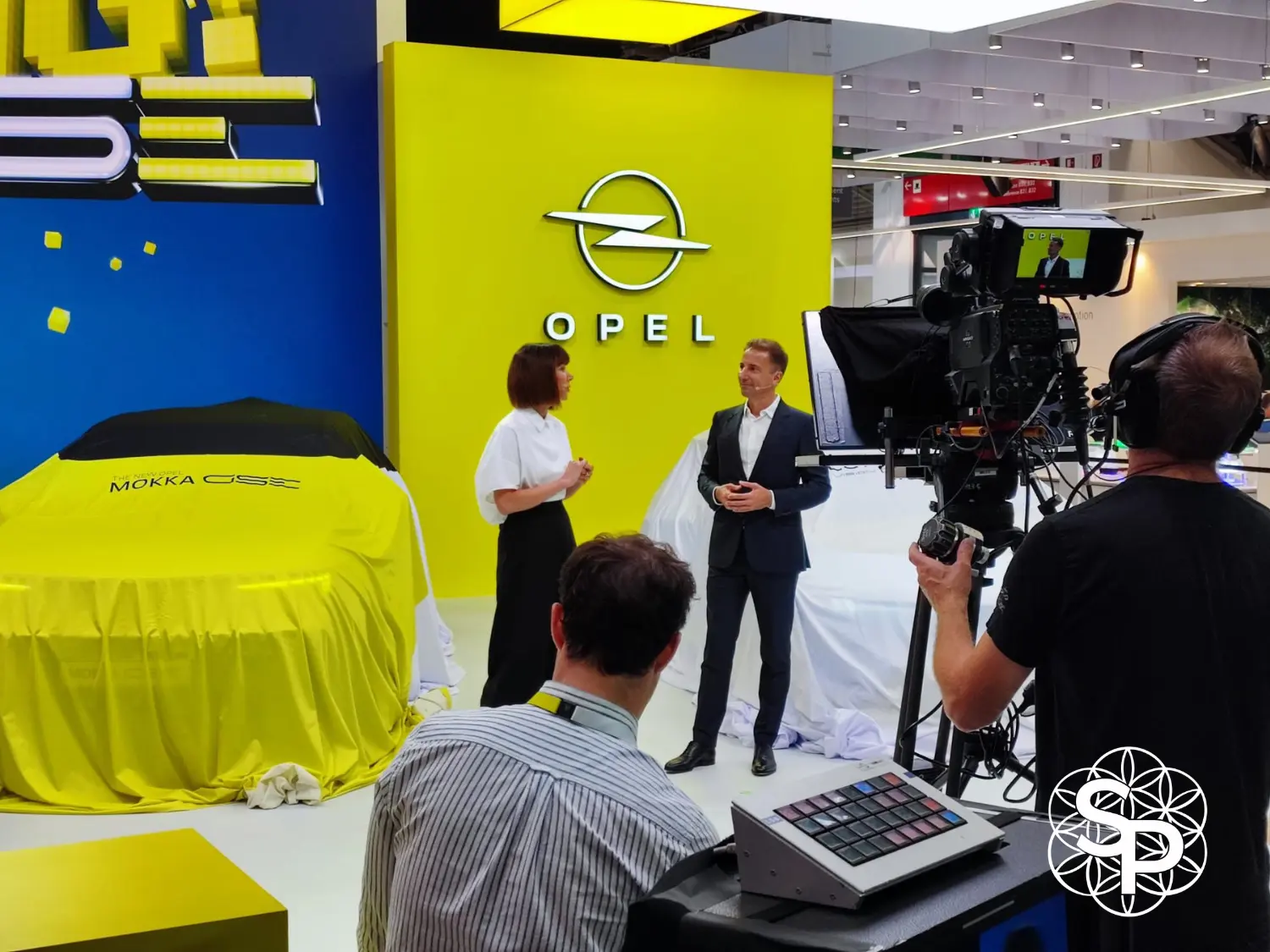
The history of the teleprompter: from the prompter to digital technology
The teleprompter was invented in 1950 in the United States, born from a collaboration between actor Fred Barton Jr., engineer Hubert Schlafly, and producer Irving Kahn, under the commercial trademark “TelePrompTer”.
1950: The invention of the TelePrompTer
In 1948, Broadway actor Fred Barton Jr. was looking for a way to secure his lines during live television broadcasts without having to hold cue cards or a paper script. He pitched the challenge to Hubert Schlafly, then a young engineer at 20th Century Fox. The first solution was mechanical: a motorized roll of butcher paper with the text printed in giant characters, rolled manually right next to the camera lens.
In 1950, Schlafly, Barton, and Kahn founded the TelePrompTer Corporation and patented the device, which was first used on the set of a live CBS show. Its political debut occurred during the 1952 Republican National Convention, a milestone that would permanently reshape global political communication.
Paper roll manually scrolled next to the camera
CRT screen and mirror
Dedicated monitors and proprietary software
Switch to digital, LCD screens
High definition, wireless prompters, tablets
Remote motorisation (MCG), Pro Teleprompter Glasses, Interrotron
Launch of the Pro Teleprompter Glasses by Solutions Prompteur
Over 75 years, the core principle hasn't changed: a text, a mirror, a speaker. What has evolved is the precision of the screens, the responsiveness of the software — and above all, the expertise of the operators who run them.
How much does it cost to rent a professional teleprompter?
The rate depends on the type of device (camera-mounted, presidential, stage), the duration of the service, and the location. A full turnkey service featuring a dedicated expert operator, professional broadcast equipment, and complete logistics typically ranges from a few hundred to several thousand euros, depending on the complexity of the event. Contact us for a tailored quote adapted to your project.
Who uses a teleprompter?
The teleprompter is used by a wide variety of profiles: TV anchors, journalists, corporate executives, political leaders, public speakers, content creators, spokespersons, and event presenters. Its use is not reserved for individuals who struggle to memorize text; it is primarily utilized to enhance delivery fluidity, maintain natural eye contact, and secure critical messaging.
Where should a teleprompter be placed?
Placement depends entirely on the public speaking context.
For a camera shoot, the teleprompter mounts directly in front of the lens, allowing the speaker to read while looking straight into the camera. On a stage or behind a podium, two glass panels placed on either side of the speaker (presidential teleprompter) allow them to naturally sweep the audience with their gaze. In a concert or on a large stage, a stage prompter is positioned on the floor or at the back of the room at a distance. For mobile shoots (Steadicam, handheld movement), a wireless teleprompter system is mounted directly on the camera rig.
The optimal setup is always determined in advance with the operator, depending on the scenography, reading distance, and technical constraints of the venue.
What is the optimal distance between the speaker and the teleprompter?
The distance varies depending on the type of teleprompter used. For a camera-mounted teleprompter in filming situations, it is generally between 2 and 8 meters. For a presidential teleprompter, the glass panels are usually placed between 1 and 3 meters from the speaker, and sometimes further on large-scale stages. The goal is to ensure comfortable reading without drawing attention to the eye line.
Can a teleprompter be used with PowerPoint?
Yes. It is entirely possible to use a teleprompter alongside a PowerPoint presentation. In corporate events, speakers frequently have access to both their slides on a confidence monitor and a scrolling script on the teleprompter. The two systems serve completely different functions: PowerPoint acts as a visual aid for the audience, while the teleprompter discreetly guides the speaker.
Can the audience see the text on the teleprompter?
No. This is the foundational principle of the device: the beamsplitter glass is completely transparent from the audience or camera side. Only the speaker, positioned on the reflective side, sees the mirrored text. This keeps the perfect illusion of a speech delivered purely from memory.
Does a teleprompter work outdoors?
Yes, but it requires specific precautions. Outdoors, high ambient light can reduce text legibility on the glass. This is why it is essential to deploy high-brightness monitors and utilize specialized glass panels, particularly for presidential teleprompters. An experienced operator will fine-tune the settings (brightness, font size, contrast) to match the real-time conditions.
Can we rent a teleprompter without an operator?
While technically possible, it is highly discouraged for any professional event. Operating without a technician means the text scrolls either at a fixed automated speed or must be managed by the speaker themselves via a foot pedal or remote control. In high-stake environments, this layout drastically increases the risk of failure: rhythm mismatches, the inability to handle a sudden ad-lib, and a complete lack of a technical backup in the event of a glitch. We offer high-quality teleprompters for purchase, complete with user training; however, all of our rental packages systematically include a dedicated expert operator to secure your performance.
What is the difference between Autocue and Autoscript?
Autocue and Autoscript are the two leading global manufacturers of professional teleprompting systems. Each offers proprietary software and dedicated hardware. Both are benchmarks utilized by major television networks and international productions. The choice between the two primarily depends on the operator’s workflow preferences and compatibility with existing infrastructure. At Solutions Prompteur, our engineering teams master both industry standards equally.